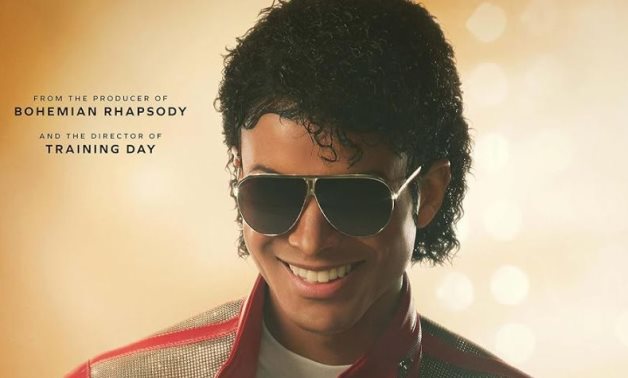
Michael movie.




Few musical biopics have arrived carrying the level of expectation, pressure, and scrutiny that surrounded Michael.
The film was never going to be judged by the standards of a standard Hollywood drama. It carried the responsibility of portraying one of the most celebrated, influential, and controversial entertainers in modern history.
Directed by Antoine Fuqua and led by a transformative performance from Jaafar Jackson, the movie ultimately succeeds most when it stops trying to explain Michael Jackson and instead immerses audiences in the scale of his artistry.
The film unfolds less like a traditional cradle-to-grave biopic and more like a memory-driven emotional journey through the defining moments of Jackson’s life. Rather than focusing entirely on chronology, the narrative constantly shifts between triumph and isolation, fame and vulnerability, spectacle and loneliness. The structure reflects the chaos of living under relentless global attention from childhood onward.
One of the film’s strongest decisions is how it portrays Michael not merely as a superstar but as someone trapped inside the machinery of fame from an extremely young age. The early sequences involving the Jackson 5 carry emotional weight because they avoid over-romanticizing his childhood. The rehearsals, pressure, and demanding environment established the psychological foundation for the man he would later become. Those scenes give the movie some of its most grounded dramatic moments.
As the story moves into the Thriller, Bad, and Dangerous eras, the film transforms visually and emotionally. The pacing becomes larger, louder, and more dreamlike, mirroring Michael Jackson’s evolution from gifted performer into a near-mythological global figure. Concert recreations become the centerpiece of the experience, staged with overwhelming scale and precision.
This is where Jaafar Jackson becomes the film’s greatest achievement.
His performance goes far beyond imitation. He captures the physical rhythm, vocal softness, and emotional fragility associated with Michael Jackson without turning the portrayal into parody. The dance sequences are remarkably convincing because they feel instinctive rather than rehearsed for mimicry. Even in quieter scenes, Jaafar understands the tension between Michael’s public image and private exhaustion.
The casting overall is one of the film’s strongest assets. The supporting actors effectively ground the story’s emotional conflicts, particularly in family scenes where ambition and control constantly collide. The relationships never feel entirely warm or stable, reinforcing the idea that Michael’s rise came at the cost of emotional normalcy.
Antoine Fuqua’s direction is most effective during moments of performance spectacle. He approaches concerts and music video recreations with enormous cinematic energy, using movement and scale to communicate why Michael Jackson became such a singular cultural force. The film understands that Jackson revolutionized not only music but the visual language of pop stardom itself.
The direction becomes less confident, however, during intimate dramatic sequences. Some emotional confrontations feel rushed, as though the movie is eager to move toward the next iconic performance rather than fully explore the psychological consequences behind them. At times, the film appears torn between becoming an honest character study and preserving a carefully controlled tribute.
That conflict becomes the movie’s central weakness.
The screenplay repeatedly hints at emotional darkness, paranoia, loneliness, and the cost of superstardom, yet it often stops short of deeply interrogating those ideas. Instead of fully embracing ambiguity, the narrative frequently retreats into safer territory. The result is a film that emotionally humanizes Michael Jackson while still protecting the myth surrounding him.
Visually, however, Michael is frequently stunning.
The cinematography recreates different eras of Jackson’s life with distinct textures and tones. The earlier years feel warmer and more intimate, while the peak fame years become increasingly stylized, polished, and isolated. Stage lighting, lens flares, and sweeping crowd shots constantly reinforce the idea that Michael existed inside a world larger than ordinary reality.
Several musical sequences are choreographed almost like fantasy cinema rather than historical reenactments. The film blurs the line between performance and psychological escape, especially during scenes inspired by Smooth Criminal, Billie Jean, and Thriller. These moments give the movie a genuine cinematic identity beyond standard biopic formulas.
The production design also deserves major credit. Costumes, stage sets, recording studios, and recreated performances are obsessively detailed without feeling artificial. The movie understands how central visual iconography was to Michael Jackson’s legacy, and it recreates those images with remarkable care.
Musically, the film carries enormous emotional power simply because Jackson’s catalog remains timeless. The soundtrack does much of the emotional heavy lifting, particularly during transitional moments where dialogue becomes secondary to atmosphere and performance. The audience is constantly reminded that Michael Jackson’s influence extended far beyond pop music into fashion, dance, video production, and global entertainment culture itself.
Yet despite all its strengths, Michael never fully resolves the tension between celebration and examination.
The film clearly wants audiences to reconnect with Michael Jackson’s genius and humanity, but it often avoids confronting the deeper contradictions that made him such a complicated public figure. That hesitation prevents the drama from reaching the emotional depth achieved by the strongest modern musical biopics.
Still, the film succeeds in something undeniably powerful: it revives the scale of Michael Jackson’s cultural impact for a new generation. Younger viewers who never experienced the hysteria surrounding Jackson’s peak years are finally able to understand why he was treated less like a celebrity and more like a global phenomenon.
By the end, Michael feels less like a definitive portrait and more like a cinematic resurrection of an icon’s aura. It may not completely capture the man behind the legend, but it vividly captures the overwhelming force of the legend itself.

Be Social




Comments
Leave a Comment